
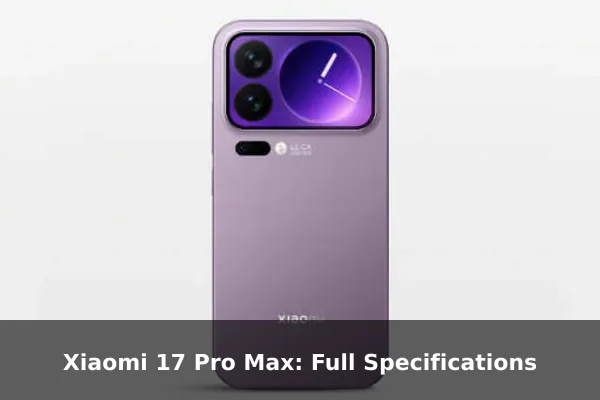
The Xiaomi 17 Pro Max is a flagship Android phone built around a large main display, a functional rear secondary display, Leica-branded triple cameras, and a very large silicon-carbon battery.
This article focuses on how the spec sheet fits together in real use: value, design, screen quality, performance headroom, camera flexibility, endurance, software, and connectivity.
Full Specifications
Network
| Technology: | GSM / HSPA / LTE / 5G |
| 2G bands: | GSM 850 / 900 / 1800 / 1900 |
| 3G bands: | HSDPA 800 / 850 / 900 / 1700(AWS) / 1900 / 2100 |
| 4G bands: | 1, 2, 3, 4, 5, 7, 8, 12, 13, 17, 18, 19, 20, 25, 26, 28, 34, 38, 39, 40, 41, 42, 48, 66, 71 |
| 5G bands: | 1, 2, 3, 5, 7, 8, 12, 13, 18, 20, 25, 26, 28, 38, 40, 41, 48, 66, 70, 71, 77, 78, 79, 80, 81, 83, 84, 89 SA/NSA |
| Speed: | HSPA, LTE, 5G |
Launch
| Announced: | 2025, September 25 |
| Status: | Available. Released 2025, September 25 |
Body
| Dimensions: | 162.9 x 77.6 x 8 mm (6.41 x 3.06 x 0.31 in) |
| Weight: | 219 g (7.72 oz) |
| Build: | Glass front (Dragon Crystal Glass 3), aluminum frame |
| SIM: | Nano-SIM + Nano-SIM |
| IP68 dust tight and water resistant (immersible up to 6m for 30 min) |
Display
| Type: | LTPO AMOLED, 68B colors, 2160Hz PWM, 120Hz, Dolby Vision, HDR Vivid, HDR10+, 3500 nits (peak) |
| Size: | 6.9 inches, 116.6 cm2 (~92.3% screen-to-body ratio) |
| Resolution: | 1200 x 2608 pixels, 19.5:9 ratio (~416 ppi density) |
| Protection: | Xiaomi Dragon Crystal Glass 3 |
| Secondary display (on the back): LTPO AMOLED, 120Hz, Dolby Vision, HDR Vivid, HDR10+, 3500 nits (peak) 2.9 inches, 596 x 976 pixels |
Platform
| OS: | Android 16, HyperOS 3 |
| Chipset: | Qualcomm SM8850-AC Snapdragon 8 Elite Gen 5 (3 nm) |
| CPU: | Octa-core (2×4.6 GHz Oryon V3 Phoenix L + 6×3.62 GHz Oryon V3 Phoenix M) |
| GPU: | Adreno 840 |
Memory
| Card slot: | No |
| Internal: | 512GB 12GB RAM, 512GB 16GB RAM, 1TB 16GB RAM |
| UFS 4.1 |
Main Camera
| Triple: | 50 MP, f/1.7, 23mm (wide), 1/1.28″, 1.22µm, dual pixel PDAF, OIS 50 MP, f/2.6, 115mm (periscope telephoto), 1/1.95″, 0.8µm, PDAF (30cm – ∞), OIS, 5x optical zoom 50 MP, f/2.4, 17mm, 102˚ (ultrawide), 1/2.88″, 0.61µm, PDAF |
| Features: | Laser AF, color spectrum sensor, Leica lens, Dual-LED dual-tone flash, HDR, panorama |
| Video: | 8K@30fps (HDR), 4K@30/60/120fps (HDR10+, 10-bit Dolby Vision HDR, 10-bit LOG), 1080p@30/60/120/240/960fps, 720p@1920fps, gyro-EIS |
Selfie camera
| Single: | 50 MP, f/2.2, 21mm (wide), 1/2.88″, 0.61µm, PDAF |
| Features: | HDR, panorama |
| Video: | 4K@30/60fps, 1080p@30/60fps, HDR10+, gyro-EIS |
Sound
| Loudspeaker: | Yes, with stereo speakers (with Dolby Atmos) |
| 3.5mm jack: | No |
| 24-bit/192kHz Hi-Res & Hi-Res wireless audio Snapdragon sound |
Comms
| WLAN: | Wi-Fi 802.11 a/b/g/n/ac/6e/7, dual-band, Wi-Fi Direct |
| Bluetooth: | 5.4, A2DP, LE, aptX HD, aptX Adaptive, LHDC 5 |
| Positioning: | GPS (L1+L5), BDS (B1I+B1c+B2a), GALILEO (E1+E5a), QZSS (L1+L5), NavIC (L5), GLONASS |
| NFC: | Yes |
| Infrared port: | Yes |
| Radio: | No |
| USB: | USB Type-C 3.2, Display Port, OTG |
Features
| Sensors: | Fingerprint (under display, ultrasonic), accelerometer, proximity, gyro, compass, barometer |
| Ultra Wideband (UWB) support |
Battery
| Type: | Si/C Li-Ion 7500 mAh |
| Charging: | 100W wired, PD3.0, QC3+, 100W PPS 50W wireless 22.5W reverse wireless |
Misc
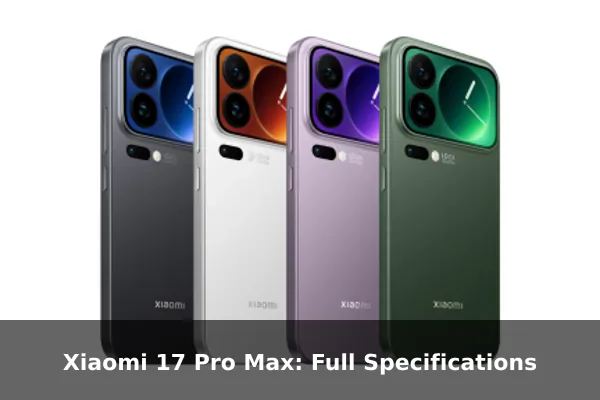
| Colors: | Black, White, Purple, Green |
| Models: | 2509FPN0BC |
| Price: | About 720 EUR |
Our Tests
| Performance: | AnTuTu: 2456317 (v10), 3543388 (v11) GeekBench: 10600 (v6) 3DMark: 6761 (Wild Life Extreme) |
| Display: | 1026 nits max brightness (measured) |
| Loudspeaker: | -26.1 LUFS (Good) |
| Battery: | Active use score 20:50h |
Price and Availability
The Xiaomi 17 Pro Max offers a compelling combination of features and performance. While the base price is around €720, the actual cost may vary depending on your location and retailer. Below, you’ll find the approximate price of the Xiaomi 17 Pro Max converted into various currencies. Please note that these are estimates based on recent exchange rates as of July 30, 2026 and may not reflect the exact price you’ll find at a retailer.
- United States: $822
- Japan: ¥134,571
- United Kingdom: £617
- Australia: A$1,184
- Canada: C$1,157
- Taiwan: NT$26,578
- Denmark: kr5.374
- Saudi Arabia: ﷼3,084
- South Korea: ₩1,190,588
- Germany: €720
- Brazil: R$4.201
- Vietnam: ₫21.628.331
- Kenya: KSh 106,185
- India: ₹78,479
- Indonesia: Rp 14.816.216
- Nigeria: ₦1,117,225
- Pakistan: ₨229,026
- Philippines: ₱50,390
- Bangladesh: ৳১,০১,০০৫
Value and Market Position
The Xiaomi 17 Pro Max targets buyers who want a top-tier Android flagship without focusing only on raw screen size. Its strongest value argument is the combination of Snapdragon 8 Elite Gen 5 hardware, 512GB base storage, a 7500mAh battery, fast wired and wireless charging, and a rear LTPO AMOLED display that adds a practical point of difference from more conventional premium phones.
Design and Durability
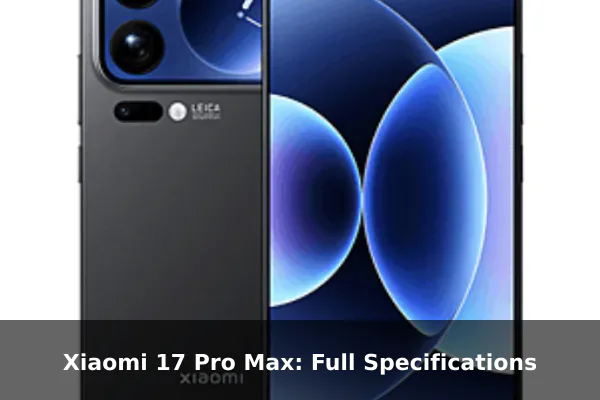
At 162.9 x 77.6 x 8 mm and 219 g, this is a large phone, but it remains relatively slim for its battery capacity. The aluminum frame, Dragon Crystal Glass 3 front, and IP68 rating with water resistance up to 6 meters for 30 minutes give it a serious flagship build profile. Dual Nano-SIM support is included, but there is no microSD slot.
Main and Rear Displays
The 6.9-inch LTPO AMOLED panel is one of the defining parts of the phone. It supports 120Hz refresh, Dolby Vision, HDR Vivid, HDR10+, 2160Hz PWM dimming, and a claimed 3500-nit peak brightness. The measured 1026-nit maximum brightness from testing suggests strong outdoor usability in realistic conditions rather than just impressive peak numbers.
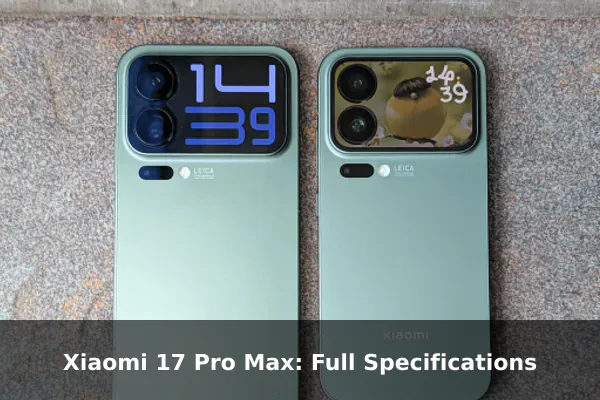
The 2.9-inch rear LTPO AMOLED display is more than a design flourish. With 120Hz support, HDR formats, and a 596 x 976 resolution, it can be useful for glanceable information, camera framing, and quick interactions without turning the phone around.
Performance Hardware
The Snapdragon 8 Elite Gen 5 platform and Adreno 840 GPU place the Xiaomi 17 Pro Max firmly in flagship territory. The listed benchmark results, including AnTuTu scores above 2.4 million on v10 and 3.5 million on v11, point to substantial headroom for gaming, multitasking, image processing, and long-term performance demands.
Camera System
The rear camera setup is built around three 50MP sensors: a stabilized wide camera, a 5x optical periscope telephoto camera, and an autofocus ultrawide camera. That gives the phone a balanced camera range rather than relying on digital zoom to cover distant subjects. Leica lenses, Laser AF, a color spectrum sensor, HDR, and panorama support add to the flagship imaging package.
Video is another major strength, with 8K recording, 4K up to 120fps, HDR10+, 10-bit Dolby Vision HDR, 10-bit LOG, and gyro-EIS. The 50MP front camera also supports autofocus and 4K video, making the phone well suited to higher-quality video calls, vlogging, and social content capture.
Battery and Charging
The 7500mAh silicon-carbon battery is unusually large for a premium slab flagship. The active use score of 20:50h suggests battery life should be one of the phone’s key selling points. Charging is also aggressive, with 100W wired charging, 50W wireless charging, and 22.5W reverse wireless charging for accessories or emergency top-ups.
Software Experience
The phone ships with Android 16 and HyperOS 3. That gives it a current-generation software base, though the long-term appeal will depend on Xiaomi’s update policy in each market. Buyers who already use Xiaomi tablets, wearables, or smart home devices may get extra value from HyperOS ecosystem features.
Connectivity and Extras
Connectivity is broad, with GSM, HSPA, LTE, and 5G support across extensive SA and NSA bands. Wi-Fi 7, Bluetooth 5.4, NFC, infrared, USB Type-C 3.2 with DisplayPort, OTG, dual-frequency satellite positioning, UWB, and an ultrasonic under-display fingerprint sensor make the phone well equipped for premium daily use. The missing 3.5mm headphone jack and radio are the main omissions.
Who Should Buy It
The Xiaomi 17 Pro Max is best suited to buyers who want a large flagship phone with exceptional battery capacity, strong camera versatility, premium display features, and cutting-edge performance. It is less ideal for users who prefer compact phones, expandable storage, wired headphones, or a simpler design without a rear screen.
Conclusion
The Xiaomi 17 Pro Max stands out as a high-end Android flagship with a rare mix of huge battery life, dual AMOLED displays, fast charging, Leica camera hardware, and top-tier Snapdragon performance. It is a strong recommendation for power users who want a premium big-screen phone with more than just standard flagship upgrades.
References
- Xiaomi official product specifications – Primary manufacturer page for the Xiaomi 17 Pro Max; should be the anchor source for official configuration, pricing, and product identity.
- Qualcomm Snapdragon 8 Elite Gen 5 product page – Official chipset source for verifying the Snapdragon 8 Elite Gen 5 platform and related CPU, GPU, connectivity, and feature claims.
- Gadgets 360 launch coverage – Established technology publication with launch-date coverage, pricing, availability, and summarized specifications attributed to Xiaomi.
- Notebookcheck Xiaomi 17 Pro Max review – Detailed independent review useful for cross-checking specifications, measured performance, display details, connectivity, and real-world device behavior.
- PhoneArena Xiaomi 17 Pro Max specifications – Long-running phone specifications database useful as a secondary reference for dimensions, display, cameras, battery, bands, and configuration cross-checks.
