
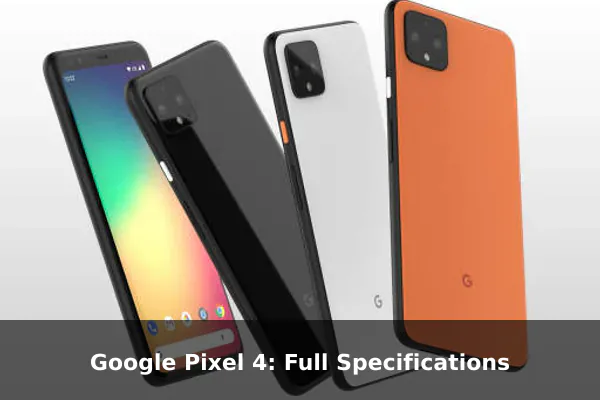
The Google Pixel 4 is a compact Android flagship from Google’s 2019 lineup, built around a 5.7-inch 90Hz P-OLED display, Snapdragon 855 performance, and Google’s computational photography approach.
This specs-focused overview looks at where the Pixel 4 still makes sense today: pocketable design, clean software, strong still photography, LTE connectivity, and the trade-offs that come with its smaller battery and older hardware.
Full Specifications
Network
| Technology: | GSM / CDMA / HSPA / EVDO / LTE |
| 2G bands: | GSM 850 / 900 / 1800 / 1900 |
| CDMA 800 / 1900 | |
| 3G bands: | HSDPA 850 / 900 / 1700(AWS) / 1900 / 2100 |
| CDMA2000 1xEV-DO | |
| 4G bands: | 1, 2, 3, 4, 5, 7, 8, 12, 13, 17, 20, 25, 26, 28, 32, 38, 39, 40, 41, 66, 71 – Global |
| 1, 2, 3, 4, 5, 7, 8, 12, 13, 14, 17, 18, 19, 20, 25, 26, 28, 29, 30, 38, 39, 40, 41, 46, 48, 66, 71 – USA | |
| Speed: | HSPA 42.2/5.76 Mbps, LTE (5CA) Cat18 1200/150 Mbps |
Launch
| Announced: | 2019, October 15 |
| Status: | Available. Released 2019, October 22 |
Body
| Dimensions: | 147.1 x 68.8 x 8.2 mm (5.79 x 2.71 x 0.32 in) |
| Weight: | 162 g (5.71 oz) |
| Build: | Glass front (Gorilla Glass 5), glass back (Gorilla Glass 5), aluminum frame |
| SIM: | Nano-SIM + eSIM |
| IP68 dust tight and water resistant (immersible up to 1.5m for 30 min) |
Display
| Type: | P-OLED, 90Hz, HDR |
| Size: | 5.7 inches, 80.7 cm2 (~79.8% screen-to-body ratio) |
| Resolution: | 1080 x 2280 pixels, 19:9 ratio (~444 ppi density) |
| Protection: | Corning Gorilla Glass 5 |
Platform
| OS: | Android 10, upgradable to Android 13 |
| Chipset: | Qualcomm SM8150 Snapdragon 855 (7 nm) |
| CPU: | Octa-core (1×2.84 GHz Kryo 485 & 3×2.42 GHz Kryo 485 & 4×1.78 GHz Kryo 485) |
| GPU: | Adreno 640 |
Memory
| Card slot: | No |
| Internal: | 64GB 6GB RAM, 128GB 6GB RAM |
| UFS 2.1 |
Main Camera
| Dual: | 12.2 MP, f/1.7, 27mm (wide), 1/2.55″, 1.4µm, dual pixel PDAF, OIS 16 MP, f/2.4, 50mm (telephoto), 1/3.6″, 1.0µm, PDAF, OIS, 2x optical zoom |
| Features: | Dual-LED flash, Pixel Shift, Auto-HDR, panorama |
| Video: | 4K@30fps, 1080p@30/60/120fps, 1080p@30fps (gyro-EIS) |
Selfie camera
| Single: | 8 MP, f/2.0, 22mm (wide), 1.22µm, no AF TOF 3D, (depth/biometrics sensor) |
| Features: | HDR |
| Video: | 1080p@30fps |
Sound
| Loudspeaker: | Yes, with stereo speakers |
| 3.5mm jack: | No |
Comms
| WLAN: | Wi-Fi 802.11 a/b/g/n/ac, dual-band, Wi-Fi Direct, DLNA |
| Bluetooth: | 5.0, A2DP, LE, aptX HD |
| Positioning: | GPS, GLONASS, BDS, GALILEO |
| NFC: | Yes |
| Radio: | No |
| USB: | USB Type-C 3.1 |
Features
| Sensors: | Face ID, accelerometer, gyro, proximity, compass, barometer |
Battery
| Type: | Li-Po 2800 mAh, non-removable |
| Charging: | 18W wired, PD2.0 Wireless |
Misc
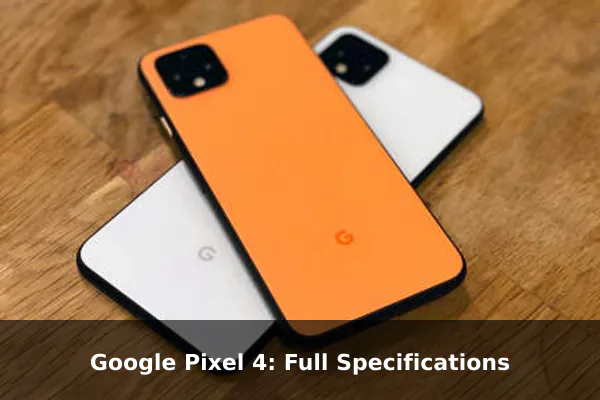
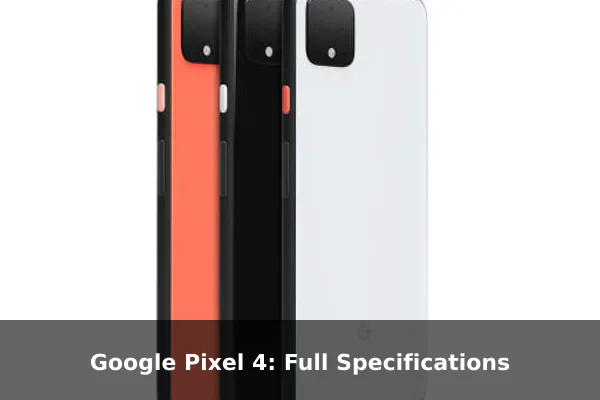
| Colors: | Clearly White, Just Black, Oh So Orange |
| Models: | G020M, G020I, GA01188-US, GA01187-US, GA01189-US, GA01191-US, GA01189-US |
| Price: | About 200 EUR |
Our Tests
| Performance: | AnTuTu: 395351 (v8) GeekBench: 2542 (v5.1) GFXBench: 31fps (ES 3.1 onscreen) |
| Display: | 423 nits max brightness (measured) |
| Camera: | Photo / Video |
| Loudspeaker: | Voice 79dB / Noise 71dB / Ring 83dB |
| Audio quality: | Noise -71.5dB / Crosstalk -69.8dB |
| Battery (old): | Endurance rating 62h |
Price and Availability
The Google Pixel 4 offers a compelling combination of features and performance. While the base price is around €200, the actual cost may vary depending on your location and retailer. Below, you’ll find the approximate price of the Google Pixel 4 converted into various currencies. Please note that these are estimates based on recent exchange rates as of September 15, 2026 and may not reflect the exact price you’ll find at a retailer.
- United States: $231
- Japan: ¥35,667
- United Kingdom: £171
- Australia: A$324
- Canada: C$321
- Taiwan: NT$7,332
- Denmark: kr1.495
- Saudi Arabia: ﷼867
- South Korea: ₩311,087
- Germany: €200
- Brazil: R$1.190
- Vietnam: ₫5.991.667
- Kenya: KSh 29,926
- India: ₹22,062
- Indonesia: Rp 4.072.943
- Nigeria: ₦311,474
- Pakistan: ₨64,163
- Philippines: ₱14,520
- Bangladesh: ৳২৮,৪৩৬
Value for Compact Flagship Buyers
The Pixel 4 is best understood as a small premium phone rather than a budget all-rounder. Its Snapdragon 855 chipset, 90Hz OLED panel, IP68 rating, wireless charging, and Google camera processing give it a stronger flagship character than many basic phones near its used-market price range. The main value question is whether you prioritize camera quality and size over battery life and newer network features.
Design and Durability
With a 147.1 x 68.8 x 8.2 mm body and 162 g weight, the Pixel 4 is noticeably easier to handle than most modern large-screen phones. The Gorilla Glass 5 front and back, aluminum frame, and IP68 dust and water resistance keep the build firmly in premium territory. The trade-off is that the glass construction still benefits from a case, especially for buyers considering a pre-owned unit.
Display Experience
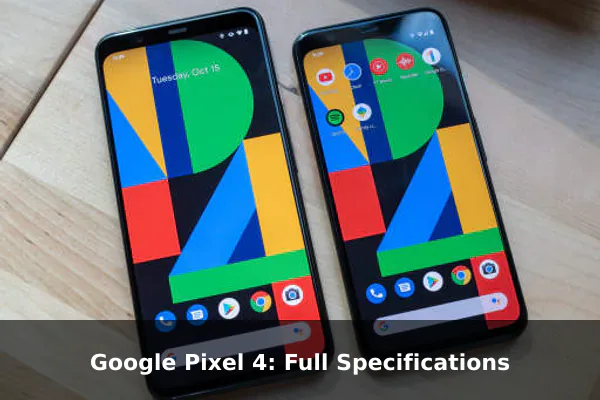
The 5.7-inch P-OLED display is one of the phone’s defining features. Its 1080 x 2280 resolution gives it a sharp density of around 444 ppi, while the 90Hz refresh rate makes scrolling feel smoother than standard 60Hz panels. HDR support is useful for compatible video, although the measured brightness figure of 423 nits means outdoor visibility is not its strongest point by current flagship standards.
Performance and Storage
The Snapdragon 855 and Adreno 640 were flagship-grade components at launch and remain capable for everyday Android use, multitasking, streaming, navigation, and moderate gaming. The 6GB RAM configuration is consistent across both 64GB and 128GB models, but there is no microSD card slot, so storage choice matters. UFS 2.1 storage helps app loading feel responsive, though newer flagships have moved beyond it.
Camera Strengths and Limits
The dual rear camera setup pairs a 12.2 MP wide camera with OIS and dual pixel PDAF with a 16 MP telephoto camera offering 2x optical zoom. That combination makes the Pixel 4 especially appealing for still photos, portraits, and zoomed framing without relying only on digital crop. Video tops out at 4K at 30fps, so users who want 4K60 recording or an ultrawide camera should look elsewhere.
Battery and Charging
The 2800 mAh battery is the Pixel 4’s most obvious compromise. Its 62-hour endurance rating indicates that this is not a heavy-use battery champion, especially with the 90Hz display enabled. Charging support is more premium than the capacity suggests, with 18W wired USB Power Delivery and wireless charging, but buyers who need long screen-on time should consider the Pixel 4 XL or a newer phone.
Software and Long-Term Use
The phone launched with Android 10 and is listed as upgradable to Android 13. That gives it a cleaner and more mature software experience than many older Android phones, but it should be evaluated as an older Pixel rather than a current update leader. For buyers, the attraction is the uncluttered Pixel interface and Google-first features, not the longest remaining update runway.
Connectivity and Extras
The Pixel 4 supports broad GSM, CDMA, HSPA, EVDO, and LTE coverage, including extensive global and U.S. LTE band support depending on variant. It also includes Wi-Fi 802.11ac, Bluetooth 5.0 with aptX HD, NFC, USB-C 3.1, GPS-family positioning, stereo speakers, Nano-SIM plus eSIM, and face unlock hardware. There is no 3.5mm headphone jack, no FM radio, and no 5G.
Who Should Buy the Google Pixel 4?
The Pixel 4 suits buyers who want a small Android phone with premium materials, a sharp 90Hz OLED display, strong still-camera output, and clean Pixel software. It is less suitable for users who need expandable storage, very long battery life, 5G, ultrawide photography, or the newest Android update cycle. As a compact LTE camera phone, it remains easy to understand and easy to recommend to the right buyer.
Conclusion
The Google Pixel 4 is a compact former flagship with a sharp 90Hz OLED screen, capable Snapdragon 855 performance, IP68 protection, and excellent still-camera fundamentals. Its small battery, missing ultrawide camera, and lack of 5G limit its appeal, but it remains a smart pick for buyers who value size, camera quality, and clean Android over maximum endurance.
References
- Google Pixel Phone Help: Pixel phone hardware tech specs – Official Google specifications for Pixel 4, including display, dimensions, battery, memory, processor, cameras, network bands, colors, materials, and warranty details.
- Google Pixel Phone Help: Safety & regulatory manual for Pixel 4 and Pixel 4 XL – Official safety, regulatory, SAR, FCC compliance, handling, warranty, and operating-temperature information for Pixel 4 and Pixel 4 XL.
- Google Blog: Pixel 4 is here to help – Official launch announcement confirming release timing, headline features, RAM, 90 Hz display, Pixel Neural Core, Titan M, pricing, colors, and carrier availability.
- Federal Communications Commission Equipment Authorization System (apps.fcc.gov) – Primary regulatory source for FCC equipment authorization records; use FCC ID A4RG020I to verify U.S. radio approvals, operating frequencies, SAR/HAC details, and compliance filings.
- GSMArena: Google Pixel 4 specifications – Well-known independent phone-spec reference useful for cross-checking public specifications, model variants, launch status, camera details, and connectivity data against official sources.
