
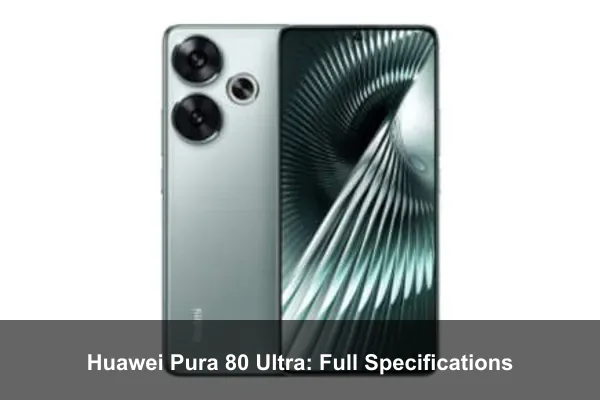
The Huawei Pura 80 Ultra arrives as the brand’s most ambitious 2025 imaging flagship, pairing a 1-inch-type main sensor with a clever dual periscope system on a body that is fully sealed against dust and water. Announced on June 11, 2025, it leans on Huawei’s in-house Kirin 9020 silicon and a high-brightness LTPO OLED panel to compete at the very top of the premium segment.
With a price of around 1220 EUR, the Pura 80 Ultra is positioned squarely against the most expensive Android and iPhone flagships. This article breaks down what those specifications actually mean in everyday use, where the phone excels, and which type of buyer will get the most out of it.
Full Specifications
Network
| Technology: | GSM / CDMA / HSPA / CDMA2000 / LTE / 5G |
| 2G bands: | GSM 850 / 900 / 1800 / 1900 |
| CDMA 800 | |
| 3G bands: | HSDPA 800 / 850 / 900 / 1700(AWS) / 1900 / 2100 |
| CDMA2000 1x | |
| 4G bands: | 1, 2, 3, 4, 5, 6, 7, 8, 9, 12, 13, 17, 18, 19, 20, 25, 26, 28, 32, 34, 38, 39, 40, 41, 42, 66 – International |
| 5G bands: | SA/NSA – China only |
| Speed: | HSPA, LTE, 5G (China only) |
Launch
| Announced: | 2025, June 11 |
| Status: | Available. Released 2025, June 11 |
Body
| Dimensions: | 163 x 76.1 x 8.3 mm (6.42 x 3.00 x 0.33 in) |
| Weight: | 233.5 g (8.25 oz) |
| Build: | Glass front, aluminum frame, glass back |
| SIM: | Nano-SIM + Nano-SIM + eSIM (max 2 at a time)Nano-SIM + eSIM |
| IP68/IP69 dust tight and water resistant (high pressure water jets; immersible up to 2m for 30 min) |
Display
| Type: | LTPO OLED, 1B colors, HDR Vivid, 120Hz, 1440Hz PWM, 3000 nits (peak) |
| Size: | 6.8 inches, 111.3 cm2 (~89.7% screen-to-body ratio) |
| Resolution: | 1276 x 2848 pixels, 20:9 ratio (~459 ppi density) |
| Protection: | Kunlun Glass 2 (Basalt-tempered) / 2nd-Gen Crystal Armor Kunlun Glass |
Platform
| OS: | EMUI (International), HarmonyOS 5.1 (China) |
| Chipset: | Kirin 9020 (7 nm) |
| CPU: | Octa-core (1×2.5 GHz Taishan Big & 3×2.15 GHz Taishan Mid & 4×1.6GHz Cortex-A510) |
| GPU: | Maleoon 920 |
Memory
| Card slot: | No |
| Internal: | 512GB 16GB RAM, 1TB 16GB RAM |
Main Camera
| Quad: | 50 MP, f/1.6-4.0, 23mm (wide), 1.0″-type, dual pixel PDAF, OIS 50 MP, f/2.4, 83mm (periscope telephoto), 1/1.28″, PDAF, sensor-shift OIS, 3.7x optical zoom 12.5 MP, f/3.6, 212mm (periscope telephoto), PDAF, sensor-shift OIS, 9.4x optical zoom 40 MP, f/2.2, 13mm (ultrawide), AF * Both telephoto cameras utilize the same camera sensor w/o continuous optical zoom |
| Features: | Laser AF, color spectrum sensor, LED flash, panorama, HDR |
| Video: | 4K, 1080p, 1080p@960fps (interpolated), HDR Vivid, gyro-EIS, OIS |
Selfie camera
| Single: | 13 MP, f/2.0, (ultrawide), AF |
| Features: | HDR, panorama |
| Video: | 4K, 1080p, 1080p@240fps, HDR Vivid, gyro-EIS |
Sound
| Loudspeaker: | Yes, with stereo speakers |
| 3.5mm jack: | No |
Comms
| WLAN: | Wi-Fi 802.11 a/b/g/n/ac/6/7, dual-band, Wi-Fi Direct |
| Bluetooth: | 5.2, A2DP, LE, L2HC |
| Positioning: | GPS (L1+L5), GLONASS (L1), BDS (B1I+B1c+B2a+B2b), GALILEO (E1+E5a+E5b), QZSS (L1+L5), NavIC |
| NFC: | Yes |
| Infrared port: | Yes |
| Radio: | No |
| USB: | USB Type-C 3.1, OTG, DisplayPort 1.2 |
Features
| Sensors: | Fingerprint (side-mounted), accelerometer, gyro, proximity, compass, barometer |
| BDS Satellite Calling and Messaging – China only |
Battery
| Type: | Li-Po 5170 mAh – InternationalLi-Po 5700 mAh – China |
| Charging: | 100W wired 80W wireless 20W reverse wireless 18W reverse wired |
Misc
| Colors: | Prestige Gold, Golden Black |
| Models: | LMR-AL10, LMU-LX9 |
| Price: | About 1220 EUR |
Our Tests
| Performance: | AnTuTu: 1160268 (v10) GeekBench: 4368 (v6) 3DMark: 1850 (Wild Life Extreme) |
| Display: | 1029 nits max brightness (measured) |
| Loudspeaker: | -24.1 LUFS (Very good) |
| Battery: | Active use score 11:51h |
Price and Availability
The Huawei Pura 80 Ultra offers a compelling combination of features and performance. While the base price is around €1.220, the actual cost may vary depending on your location and retailer. Below, you’ll find the approximate price of the Huawei Pura 80 Ultra converted into various currencies. Please note that these are estimates based on recent exchange rates as of June 16, 2026 and may not reflect the exact price you’ll find at a retailer.
- United States: $1,415
- Japan: ¥226,643
- United Kingdom: £1,054
- Australia: A$2,001
- Canada: C$1,979
- Taiwan: NT$44,629
- Denmark: kr9.105
- Saudi Arabia: ﷼5,306
- South Korea: ₩2,142,829
- Germany: €1.220
- Brazil: R$7.152
- Vietnam: ₫36.937.065
- Kenya: KSh 183,370
- India: ₹1,34,065
- Indonesia: Rp 25.055.932
- Nigeria: ₦1,913,657
- Pakistan: ₨393,874
- Philippines: ₱85,472
- Bangladesh: ৳১,৭৩,৭৬১
Value: What 1220 EUR Buys You
At roughly 1220 EUR the Pura 80 Ultra sits in the rarified ultra-premium tier, and Huawei justifies the asking price with hardware that is hard to match elsewhere. You get a 1-inch-type main camera, a switchable dual periscope telephoto, IP68/IP69 sealing, 16GB of RAM in both the 512GB and 1TB configurations, and 100W wired charging. The catch is software and connectivity context: the international variant ships with EMUI rather than Google services, and full 5G is reserved for the China model. For buyers who prioritize imaging and build quality over an app ecosystem, the value proposition is strong; for those tied to Google apps, the calculus is more nuanced.
Design and Build Quality
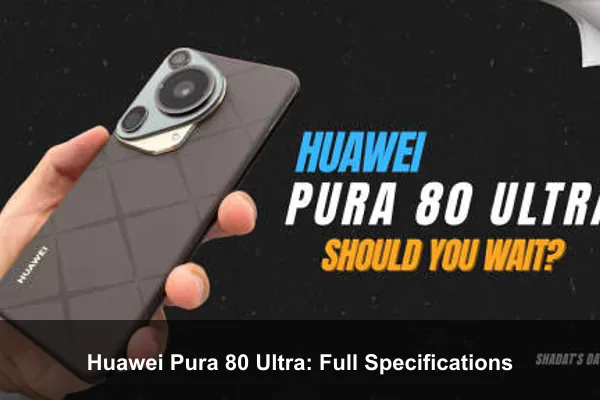
The Pura 80 Ultra measures 163 x 76.1 x 8.3 mm and weighs a substantial 233.5 g, a heft that reflects its large battery and dense camera module. Huawei uses a glass front and back over an aluminum frame, finished in Prestige Gold or Golden Black. The standout durability feature is the combined IP68/IP69 rating, meaning the phone resists not only immersion up to 2m for 30 minutes but also high-pressure and high-temperature water jets, which is rare even among flagships. Kunlun Glass 2 protection adds extra scratch and drop resistance on the front.
Display Experience
The 6.8-inch LTPO OLED panel is a highlight, running at a 1276 x 2848 resolution for roughly 459 ppi and a crisp 89.7% screen-to-body ratio. It supports a 120Hz adaptive refresh rate, HDR Vivid, and high-frequency 1440Hz PWM dimming that should ease eye strain in dark environments. Huawei quotes a 3000-nit peak brightness; our own testing measured around 1029 nits in everyday full-screen conditions, which remains comfortably legible outdoors. It is a panel built for both media consumption and long reading sessions.
Performance and Hardware
Powering the phone is the 7nm Kirin 9020, an octa-core chip with a 2.5 GHz Taishan prime core, three 2.15 GHz mid cores, and four 1.6 GHz efficiency cores, paired with the Maleoon 920 GPU. In our benchmarks it returned an AnTuTu score of 1160268 (v10), a GeekBench 6 result of 4368, and 1850 in 3DMark Wild Life Extreme. Those numbers trail the latest Qualcomm and Apple flagships in raw terms, but with 16GB of RAM as standard the day-to-day experience stays fluid across multitasking, gaming, and the demanding camera pipeline.
Camera System
Imaging is the reason this phone exists. The quad rear array leads with a 50 MP 1-inch-type wide sensor (f/1.6-4.0, variable aperture, OIS), backed by a 40 MP ultrawide with autofocus. The clever part is the telephoto setup: a 50 MP 83mm periscope at 3.7x and a 12.5 MP 212mm periscope at 9.4x share the same sensor, delivering both medium and long reach without continuous optical zoom in between. A laser AF module and color spectrum sensor round out the system, and video tops out at 4K with HDR Vivid and OIS. The 13 MP autofocus ultrawide selfie camera is more functional than flashy but captures sharp group shots.
Battery and Charging
The international model carries a 5170 mAh Li-Po battery, while the China variant bumps that to 5700 mAh. In our active-use testing the phone delivered an 11:51h endurance score, a solid result for a flagship driving a high-resolution OLED. Charging is genuinely fast at 100W wired, complemented by 80W wireless, 20W reverse wireless, and 18W reverse wired, so topping up and sharing power with accessories are both quick and convenient.
Software and Connectivity
Software is the key regional differentiator: the international unit runs EMUI while the China unit ships with HarmonyOS 5.1. Connectivity is well stocked with Wi-Fi 7, Bluetooth 5.2 with L2HC, NFC, an infrared port, and USB Type-C 3.1 with DisplayPort output. Positioning support is comprehensive across GPS, GLONASS, BDS, Galileo, QZSS, and NavIC. Note that the full 5G experience and BDS satellite calling are China-only, while the international band layout focuses on 4G LTE, so check regional support before importing.
Who Should Buy the Pura 80 Ultra
This phone is for the dedicated mobile photographer who wants reach and sensor size in one device, and for buyers who value rugged sealing and premium materials. It also suits users already comfortable in Huawei’s software ecosystem. It is a weaker fit for anyone who depends on Google Play services or wants guaranteed 5G outside China, and the 233.5 g weight may deter those who prefer a lighter handset.
Conclusion
The Huawei Pura 80 Ultra is a focused, camera-first flagship that delivers a genuinely distinctive imaging system, an excellent LTPO OLED display, exceptional water and dust resistance, and fast 100W charging. Its trade-offs are regional rather than technical: software ecosystem and 5G availability depend heavily on which model you buy. If photography, durability, and a top-tier screen sit at the top of your list and you can work within Huawei’s software environment, the Pura 80 Ultra is a compelling, if pricey, choice worth recommending.
