
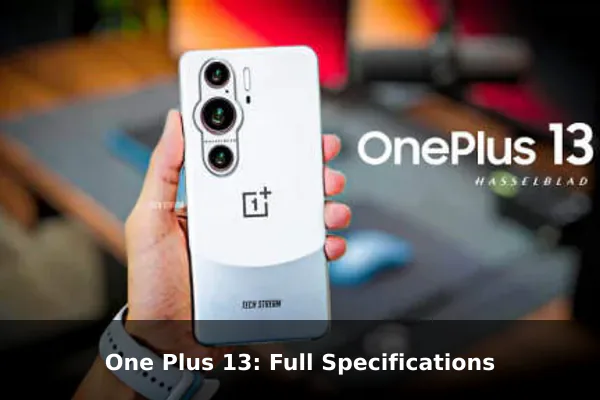
The One Plus 13 is a premium Android flagship built around the Snapdragon 8 Elite platform, a large LTPO AMOLED display, and a high-capacity silicon-carbon battery.
This specs-focused overview looks at the phone from a buyer comparison angle, highlighting the practical impact of its screen, performance, cameras, charging, durability, software, and connectivity.
Full Specifications
Network
| Technology: | GSM / HSPA / LTE / 5G |
| 2G bands: | GSM 850 / 900 / 1800 / 1900 |
| 3G bands: | HSDPA 800 / 850 / 900 / 1700(AWS) / 1900 / 2100 – International |
| HSDPA 850 / 900 / 1900 / 2100 – India | |
| 4G bands: | 1, 2, 3, 4, 5, 7, 8, 12, 13, 17, 18, 19, 20, 25, 26, 28, 30, 32, 38, 39, 40, 41, 48, 66, 71 – International |
| 1, 3, 4, 5, 7, 8, 18, 19, 20, 26, 28, 34, 38, 39, 40, 41, 42, 48, 66 – China, India | |
| 5G bands: | 1, 2, 3, 5, 7, 8, 12, 20, 25, 28, 30, 38, 40, 41, 48, 66, 71, 75, 77, 78 SA/NSA/Sub6 – International |
| 1, 3, 5, 7, 8, 20, 28, 38, 40, 41, 48, 66, 77, 78 SA/NSA – China, India | |
| Speed: | HSPA, LTE (CA), 5G |
Launch
| Announced: | 2024, October 31 |
| Status: | Available. Released 2024, November 01 |
Body
| Dimensions: | 162.9 x 76.5 x 8.5 mm or 8.9 mm |
| Weight: | 210 g or 213 g (7.41 oz) |
| Build: | Glass front (Ceramic Guard), glass back or silicone polymer back (eco leather), aluminum frame |
| SIM: | Nano-SIM + Nano-SIM + eSIM (max 2 at a time)Nano-SIM + Nano-SIM |
| IP68/IP69 dust tight and water resistant (high pressure water jets; immersible up to 1.5m for 30 min) |
Display
| Type: | LTPO 4.1 AMOLED, 1B colors, 120Hz, 2160Hz PWM, Dolby Vision, HDR10+, HDR Vivid, 800 nits (typ), 1600 nits (HBM), 4500 nits (peak) |
| Size: | 6.82 inches, 113.0 cm2 (~90.7% screen-to-body ratio) |
| Resolution: | 1440 x 3168 pixels (~510 ppi density) |
| Protection: | Ceramic Guard glass, Mohs level 4 |
| Ultra HDR image support |
Platform
| OS: | Android 15, up to 4 major Android upgrades, OxygenOS 15 (International), ColorOS 15 (China) |
| Chipset: | Qualcomm SM8750-AB Snapdragon 8 Elite (3 nm) |
| CPU: | Octa-core (2×4.32 GHz Oryon V2 Phoenix L + 6×3.53 GHz Oryon V2 Phoenix M) |
| GPU: | Adreno 830 |
Memory
| Card slot: | No |
| Internal: | 256GB 12GB RAM, 512GB 12GB RAM, 512GB 16GB RAM, 1TB 24GB RAM |
| UFS 4.0 |
Main Camera
| Triple: | 50 MP, f/1.6, 23mm (wide), 1/1.43″, 1.12µm, multi-directional PDAF, OIS 50 MP, f/2.6, 73mm (periscope telephoto), 1/1.95″, 0.8µm, 3x optical zoom, PDAF, OIS 50 MP, f/2.0, 15mm, 120˚ (ultrawide), 1/2.75″, 0.64µm, PDAF |
| Features: | Laser focus, Hasselblad Color Calibration, color spectrum sensor, Dual-LED flash, HDR, panorama |
| Video: | 8K@30fps, 4K@30/60fps, 1080p@30/60/240/480fps, Auto HDR, gyro-EIS, Dolby Vision |
Selfie camera
| Single: | 32 MP, f/2.4, 21mm (wide), 1/2.74″, 0.8µm |
| Features: | HDR, panorama |
| Video: | 4K@30/60fps, 1080p@30/60fps, gyro-EIS |
Sound
| Loudspeaker: | Yes, with stereo speakers |
| 3.5mm jack: | No |
| 24-bit/192kHz Hi-Res audio |
Comms
| WLAN: | Wi-Fi 802.11 a/b/g/n/ac/6/7, dual or tri-band, Wi-Fi Direct |
| Bluetooth: | 5.4, A2DP, LE, aptX HD, LHDC 5 |
| Positioning: | GPS (L1+L5), GLONASS (G1), BDS (B1I+B1c+B2a), GALILEO (E1+E5a), QZSS (L1+L5), NavIC |
| NFC: | Yes |
| Infrared port: | Yes |
| Radio: | No |
| USB: | USB Type-C 3.2, OTG |
Features
| Sensors: | Fingerprint (under display, ultrasonic), accelerometer, gyro, proximity, compass, barometer |
| Circle to Search |
Battery
| Type: | Si/C Li-Ion 6000 mAh |
| Charging: | 100W wired, PD, QC, 50% in 13 min, 100% in 36 min 50W wireless 10W reverse wireless 5W reverse wired |
Misc
| Colors: | Black Eclipse, Arctic Dawn, Midnight Ocean |
| Models: | CPH2655, CPH2653, PJZ110, CPH2649 |
| SAR: | 1.13 W/kg (head) 1.15 W/kg (body) |
| Price: | € 822.00 / $ 787.98 / £ 749.99 / ₹ 62,999 |
Our Tests
| Performance: | AnTuTu: 2690491 (v10) GeekBench: 9278 (v6) 3DMark: 6615 (Wild Life Extreme) |
| Display: | 1204 nits max brightness (measured) |
| Loudspeaker: | -23.5 LUFS (Very good) |
| Battery: | Active use score 15:28h |
EU LABEL
| Energy: | Class A |
| Battery: | 61:36h endurance, 1000 cycles |
| Free fall: | Class D (45 falls) |
| Repairability: | Class B |
Price and Availability
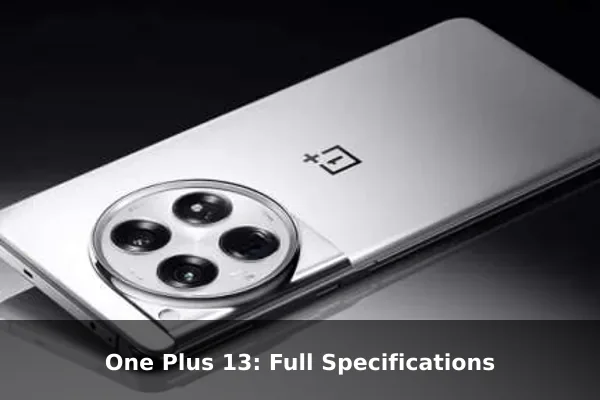
The One Plus 13 offers a compelling combination of features and performance. While the base price is around €822, the actual cost may vary depending on your location and retailer. Below, you’ll find the approximate price of the One Plus 13 converted into various currencies. Please note that these are estimates based on recent exchange rates as of August 10, 2026 and may not reflect the exact price you’ll find at a retailer.
- United States: $950
- Japan: ¥149,950
- United Kingdom: £704
- Australia: A$1,345
- Canada: C$1,325
- Taiwan: NT$30,640
- Denmark: kr6.133
- Saudi Arabia: ﷼3,562
- South Korea: ₩1,340,446
- Germany: €822
- Brazil: R$4.833
- Vietnam: ₫24.716.678
- Kenya: KSh 122,703
- India: ₹90,358
- Indonesia: Rp 16.974.074
- Nigeria: ₦1,294,054
- Pakistan: ₨263,964
- Philippines: ₱57,772
- Bangladesh: ৳১,১৭,৩৫৬
Value Position
The One Plus 13 sits in flagship territory, but its value argument is unusually broad: top-tier silicon, a 1440p-class LTPO display, fast wired and wireless charging, IP68/IP69 protection, and large storage options. Buyers comparing premium Android phones should see it less as a compact lifestyle device and more as a performance-and-endurance flagship.
Design and Durability
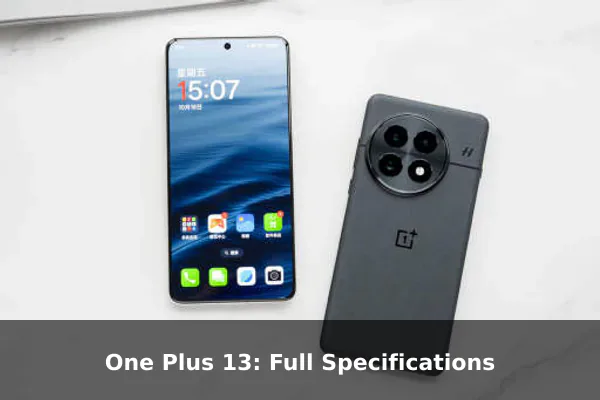
At 162.9 x 76.5 mm and up to 213 g depending on finish, the One Plus 13 is a large phone. The build combines Ceramic Guard glass on the front, an aluminum frame, and either glass or eco-leather-style silicone polymer on the back. The IP68/IP69 rating is a major practical advantage for users who want stronger dust and water resistance than the basic splash protection found on many phones.
Display Experience
The 6.82-inch LTPO 4.1 AMOLED panel is one of the phone’s strongest areas. It combines a sharp 1440 x 3168 resolution, 120Hz refresh rate, Dolby Vision, HDR10+, HDR Vivid, Ultra HDR image support, and high listed peak brightness. The measured 1204-nit brightness result from the provided test data suggests strong outdoor usability, even if real-world peak brightness depends on content and conditions.
Performance Hardware
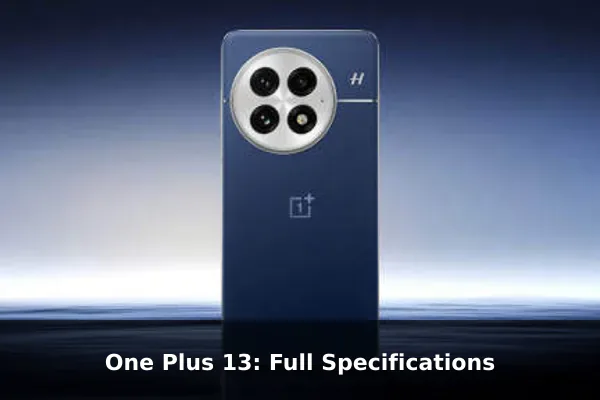
The Snapdragon 8 Elite chipset, Adreno 830 GPU, UFS 4.0 storage, and up to 24GB RAM make the One Plus 13 clearly performance-focused. The supplied benchmark figures, including AnTuTu v10 above 2.69 million and GeekBench v6 at 9278, point to flagship-class headroom for gaming, heavy multitasking, video work, and long-term app performance.
Camera System
The rear camera setup is balanced rather than experimental: a 50 MP wide camera with OIS, a 50 MP 3x periscope telephoto camera with OIS, and a 50 MP ultrawide camera with autofocus. Hasselblad Color Calibration, laser focus, a color spectrum sensor, Dolby Vision video, and 8K recording support give it the hardware profile expected from a serious flagship camera phone.
Battery and Charging
The 6000 mAh silicon-carbon battery is a defining feature. The provided active use score of 15:28h and EU label endurance figure of 61:36h indicate strong stamina for heavy users. Charging support is also broad, with 100W wired charging, 50W wireless charging, reverse wireless charging, and reverse wired charging.
Software and Updates
The phone ships with Android 15, using OxygenOS 15 internationally and ColorOS 15 in China. The promise of up to four major Android upgrades gives it a reasonable long-term software path, while Circle to Search adds a current Android convenience feature for visual search and quick lookup tasks.
Connectivity and Audio
Connectivity is comprehensive, with broad 4G and sub-6 5G support across international and China/India variants, Wi-Fi 7, Bluetooth 5.4, NFC, infrared, dual-frequency positioning support, and USB Type-C 3.2 with OTG. Stereo speakers, Hi-Res audio support, and a very good loudspeaker test result strengthen its media credentials, though there is no 3.5 mm headphone jack.
Who Should Buy It
The One Plus 13 is best suited to buyers who prioritize high performance, a large premium display, long battery life, fast charging, and a capable triple-camera setup. It is less ideal for users who want a small phone, expandable storage, or a wired headphone jack.
Conclusion
The One Plus 13 is a strong flagship choice for power users who want speed, endurance, display quality, and modern connectivity in one device. Recommended if you want a large premium Android phone with battery life as a headline feature.
References
- OnePlus 13 Specs | OnePlus North America – Primary manufacturer specification sheet for dimensions, display, chipset, memory, storage, battery, charging, cameras, connectivity bands, ports, sensors, and box contents.
- OnePlus 13 Product Page | OnePlus United States – Official product page for feature claims such as IP68/IP69 rating, Snapdragon 8 Elite positioning, display features, camera system, video features, and battery/charging notes.
- OnePlus Support User Manuals – Official OnePlus manual source for confirming model identifiers, setup details, SIM/charging guidance, regulatory wording, and safety information.
- Qualcomm Snapdragon 8 Elite Mobile Platform – Official chipset source for Snapdragon 8 Elite CPU, GPU, modem, Wi-Fi, Bluetooth, AI, and platform capability details used by the OnePlus 13.
- FCC Equipment Authorization (fcc.gov) – Official US regulatory filings can verify the OnePlus 13 FCC ID 2ABZ2-OP23895, wireless certification, SAR, hearing-aid compatibility, and radio compliance details.
