
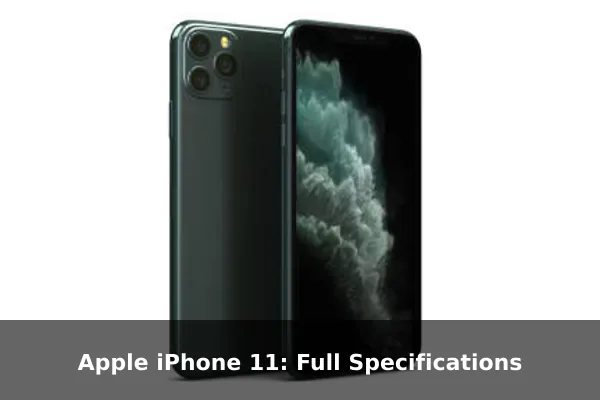
The Apple iPhone 11 arrived in September 2019 as the mainstream pillar of that year’s lineup, pairing the A13 Bionic chip with a dual-camera system at a friendlier price than the Pro models. Years later it remains a popular pick on the used and refurbished market, where its long iOS support window and dependable hardware continue to make it relevant.
This guide breaks down what the iPhone 11 actually offers in 2026 terms, from its 6.1-inch Liquid Retina LCD and IP68 durability to real-world performance and battery endurance. The figures here are drawn from Apple’s published specifications and independent lab measurements so you can judge where it still holds up and where its age shows.
Full Specifications
Network
| Technology: | GSM / CDMA / HSPA / EVDO / LTE |
| 2G bands: | GSM 850 / 900 / 1800 / 1900 |
| CDMA 800 / 1900 | |
| 3G bands: | HSDPA 850 / 900 / 1700(AWS) / 1900 / 2100 |
| CDMA2000 1xEV-DO | |
| 4G bands: | 1, 2, 3, 4, 5, 7, 8, 11, 12, 13, 17, 18, 19, 20, 21, 25, 26, 28, 29, 30, 32, 34, 38, 39, 40, 41, 42, 46, 48, 66 – A2221 |
| 1, 2, 3, 4, 5, 7, 8, 12, 13, 14, 17, 18, 19, 20, 25, 26, 29, 30, 34, 38, 39, 40, 41, 42, 46, 48, 66, 71 – A2111, A2223 | |
| Speed: | HSPA 42.2/5.76 Mbps, LTE (CA) Cat16 1024/150 Mbps, EV-DO Rev.A 3.1 Mbps |
Launch
| Announced: | 2019, September 10 |
| Status: | Available. Released 2019, September 20 |
Body
| Dimensions: | 150.9 x 75.7 x 8.3 mm (5.94 x 2.98 x 0.33 in) |
| Weight: | 194 g (6.84 oz) |
| Build: | Glass front (Corning-made glass), glass back (Corning-made glass), aluminum frame (7000 series) |
| SIM: | Nano-SIM + eSIMNano-SIM + Nano-SIM (China) |
| IP68 dust tight and water resistant (immersible up to 2m for 30 min) Apple Pay (Visa, MasterCard, AMEX certified) |
Display
| Type: | Liquid Retina IPS LCD, 625 nits (typ) |
| Size: | 6.1 inches, 90.3 cm2 (~79.0% screen-to-body ratio) |
| Resolution: | 828 x 1792 pixels, 19.5:9 ratio (~326 ppi density) |
| Protection: | Scratch-resistant glass |
Platform
| OS: | iOS 13, upgradable to iOS 18.6 |
| Chipset: | Apple A13 Bionic (7 nm+) |
| CPU: | Hexa-core (2×2.65 GHz Lightning + 4×1.8 GHz Thunder) |
| GPU: | Apple GPU (4-core graphics) |
Memory
| Card slot: | No |
| Internal: | 64GB 4GB RAM, 128GB 4GB RAM, 256GB 4GB RAM |
| NVMe |
Main Camera
| Dual: | 12 MP, f/1.8, 26mm (wide), 1/2.55″, 1.4µm, dual pixel PDAF, OIS 12 MP, f/2.4, 120˚, 13mm (ultrawide), 1/3.6″ |
| Features: | Dual-LED dual-tone flash, HDR (photo/panorama) |
| Video: | 4K@24/25/30/60fps, 1080p@25/30/60/120/240fps, HDR, stereo sound rec. |
Selfie camera
| Single: | 12 MP, f/2.2, 23mm (wide), 1/3.6″, 1.0µm SL 3D, (depth/biometrics sensor) |
| Features: | HDR |
| Video: | 4K@24/25/30/60fps, 1080p@25/30/60/120fps, gyro-EIS |
Sound
| Loudspeaker: | Yes, with stereo speakers |
| 3.5mm jack: | No |
Comms
| WLAN: | Wi-Fi 802.11 a/b/g/n/ac/6, dual-band, hotspot |
| Bluetooth: | 5.0, A2DP, LE |
| Positioning: | GPS, GLONASS, GALILEO, QZSS |
| NFC: | Yes |
| Radio: | No |
| USB: | Lightning, USB 2.0 |
Features
| Sensors: | Face ID, accelerometer, gyro, proximity, compass, barometer |
| Ultra Wideband (UWB) support |
Battery
| Type: | Li-Ion 3110 mAh, non-removable (11.91 Wh) |
| Charging: | Wired, PD2.0, 50% in 30 min Wireless (Qi) |
Misc
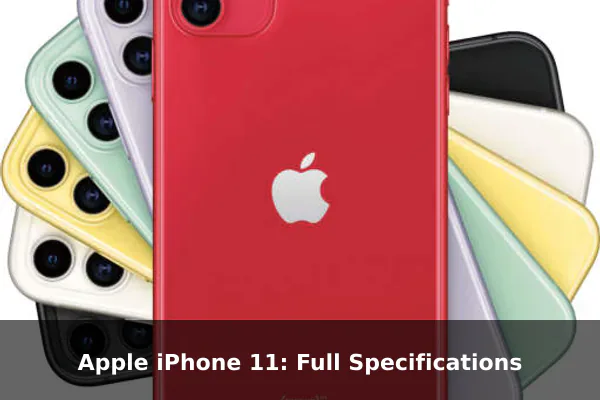
| Colors: | Black, Green, Yellow, Purple, Red, White |
| Models: | A2221, A2111, A2223, iPhone12,1 |
| SAR: | 1.09 W/kg (head) 1.18 W/kg (body) |
| SAR EU: | 0.95 W/kg (head) 0.99 W/kg (body) |
| Price: | € 200.00 / $ 114.15 / £ 150.00 |
Our Tests
| Performance: | AnTuTu: 419453 (v7) GeekBench: 13882 (v4.4) GFXBench: 60fps (ES 3.1 onscreen) |
| Display: | 1505:1 contrast ratio, 644 nits max brightness (measured) |
| Camera: | Photo / Video |
| Loudspeaker: | Voice 70dB / Noise 72dB / Ring 76dB |
| Audio quality: | Noise -94.2dB / Crosstalk -80.8dB |
| Battery (old): | Endurance rating 94h |
Price and Availability
The Apple iPhone 11 offers a compelling combination of features and performance. While the base price is around €200, the actual cost may vary depending on your location and retailer. Below, you’ll find the approximate price of the Apple iPhone 11 converted into various currencies. Please note that these are estimates based on recent exchange rates as of June 11, 2026 and may not reflect the exact price you’ll find at a retailer.
- United States: $231
- Japan: ¥37,048
- United Kingdom: £173
- Australia: A$330
- Canada: C$322
- Taiwan: NT$7,308
- Denmark: kr1.493
- Saudi Arabia: ﷼865
- South Korea: ₩351,702
- Germany: €200
- Brazil: R$1.196
- Vietnam: ₫6.054.351
- Kenya: KSh 29,937
- India: ₹21,999
- Indonesia: Rp 4.135.942
- Nigeria: ₦312,459
- Pakistan: ₨64,257
- Philippines: ₱14,168
- Bangladesh: ৳২৮,৩৫৪
Is the iPhone 11 Still Worth Buying?
The iPhone 11’s biggest argument is value through longevity. Launched on iOS 13 and upgradable to iOS 18.6, it has received far more software support than most phones of its generation, which means current apps and security updates still work on it. For a buyer shopping the secondhand or refurbished market, that combination of a current OS and proven hardware is the core reason to consider it. As always, confirm exact pricing and battery health before purchase, since both vary by seller and unit age.
Design and Build Quality
At 150.9 x 75.7 x 8.3 mm and 194 g, the iPhone 11 is a solidly built handset with a glass front and back over a 7000-series aluminum frame, both glass panels supplied by Corning. It carries an IP68 rating for dust and water resistance, certified to roughly 2 meters for up to 30 minutes per Apple’s stated figures and the underlying IEC 60529 standard. The six color options, including Black, White, Green, Yellow, Purple, and Red, gave it a more playful identity than the muted Pro range.
Display
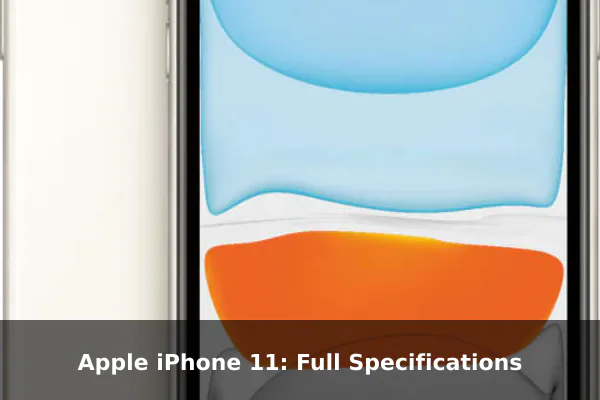
The 6.1-inch Liquid Retina IPS LCD runs at 828 x 1792 pixels, or about 326 ppi, with a 19.5:9 aspect ratio. Apple rated it at 625 nits typical brightness, and independent testing measured peaks around 644 nits with a contrast ratio near 1505:1. It is a 60 Hz panel without HDR or the higher resolution of OLED rivals, so it is best understood as accurate and bright rather than cutting edge by today’s standards.
Performance
The A13 Bionic (7 nm+) with its hexa-core CPU and 4-core Apple GPU was a flagship-class processor at launch and still handles everyday tasks comfortably. Benchmark records from its era show AnTuTu scores around 419,000 (v7) and GeekBench results in the 13,800 range (v4.4), with GFXBench sustaining 60 fps in the ES 3.1 onscreen test. Paired with 4 GB of RAM and fast NVMe storage in 64, 128, or 256 GB capacities, it remains responsive for browsing, messaging, and most apps, though heavy modern gaming will reveal its age.
Camera System
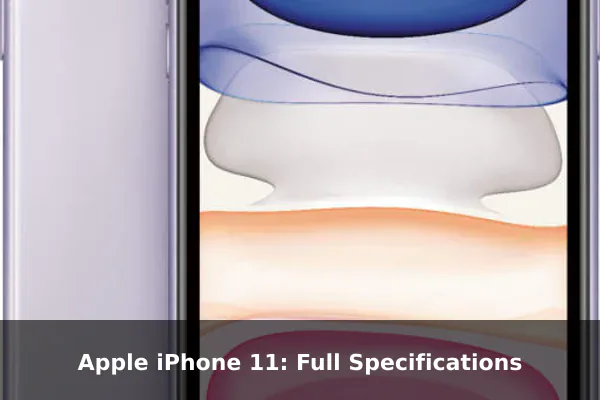
The dual 12 MP setup combines a wide (f/1.8, OIS, dual-pixel PDAF) and a 120-degree ultrawide (f/2.4) lens, a notable upgrade over single-camera predecessors. It captures 4K video up to 60 fps with stereo sound, while the 12 MP TrueDepth front camera also shoots 4K and supports Face ID. There is no telephoto lens or dedicated night mode hardware beyond what the software provides, so it trades reach for consistency in good light.
Battery and Charging
A 3,110 mAh battery (11.91 Wh) drives strong endurance for the size, with an older endurance rating of around 94 hours in mixed use. It supports USB Power Delivery fast charging to 50% in about 30 minutes, though the fast charger was not always included in the box, plus Qi wireless charging. The Lightning port and USB 2.0 transfer speeds are the main connectivity caveats compared with newer USB-C iPhones.
Connectivity
This is a 4G LTE device with no 5G, which is the most important limitation for forward-looking buyers. It does offer Wi-Fi 6 (802.11ax), Bluetooth 5.0, NFC for Apple Pay, and Ultra Wideband (UWB) support, along with GPS, GLONASS, Galileo, and QZSS positioning. SIM support includes Nano-SIM plus eSIM, with a dual physical SIM variant for China.
Who Should Buy It
The iPhone 11 suits budget-conscious buyers who want a reliable iPhone experience with current software support and do not need 5G, OLED, or the latest cameras. It is also a sensible first iPhone, a hand-me-down for family members, or a dependable backup device. Power users, mobile gamers, and anyone planning to keep a phone for many more years will be better served by a newer model with 5G and a more future-proof chip.
Conclusion
The iPhone 11 has aged gracefully thanks to the A13 Bionic, a durable IP68 build, a capable dual-camera system, and an unusually long software support window. Its main compromises are the 60 Hz LCD, the lack of 5G, and Lightning charging. If you want an affordable, well-supported iPhone for everyday use and can buy a unit with healthy battery life, it remains a smart value pick; if 5G or long-term future-proofing matters to you, step up to a newer model instead.
Official references
- Apple Support – iPhone 11 Technical Specifications – Primary Apple specification page for iPhone 11 dimensions, display, chip, cameras, battery, wireless features, SIM support, and model details.
- Apple Support – Identify your iPhone model – Official Apple reference for iPhone 11 model numbers, capacities, colors, physical identifiers, and regional variants.
- Apple Newsroom – Apple introduces dual camera iPhone 11 – Official launch announcement confirming release timing, key features, storage options, colors, pricing context, and major hardware claims.
- International Electrotechnical Commission – IEC 60529 IP Code standard – Official standard referenced for the iPhone 11 IP68 splash, water, and dust resistance rating.
- Federal Communications Commission Equipment Authorization (fcc.gov) – Primary US regulator source for radio certification filings and FCC IDs when verifying wireless compliance details for US iPhone 11 models.
